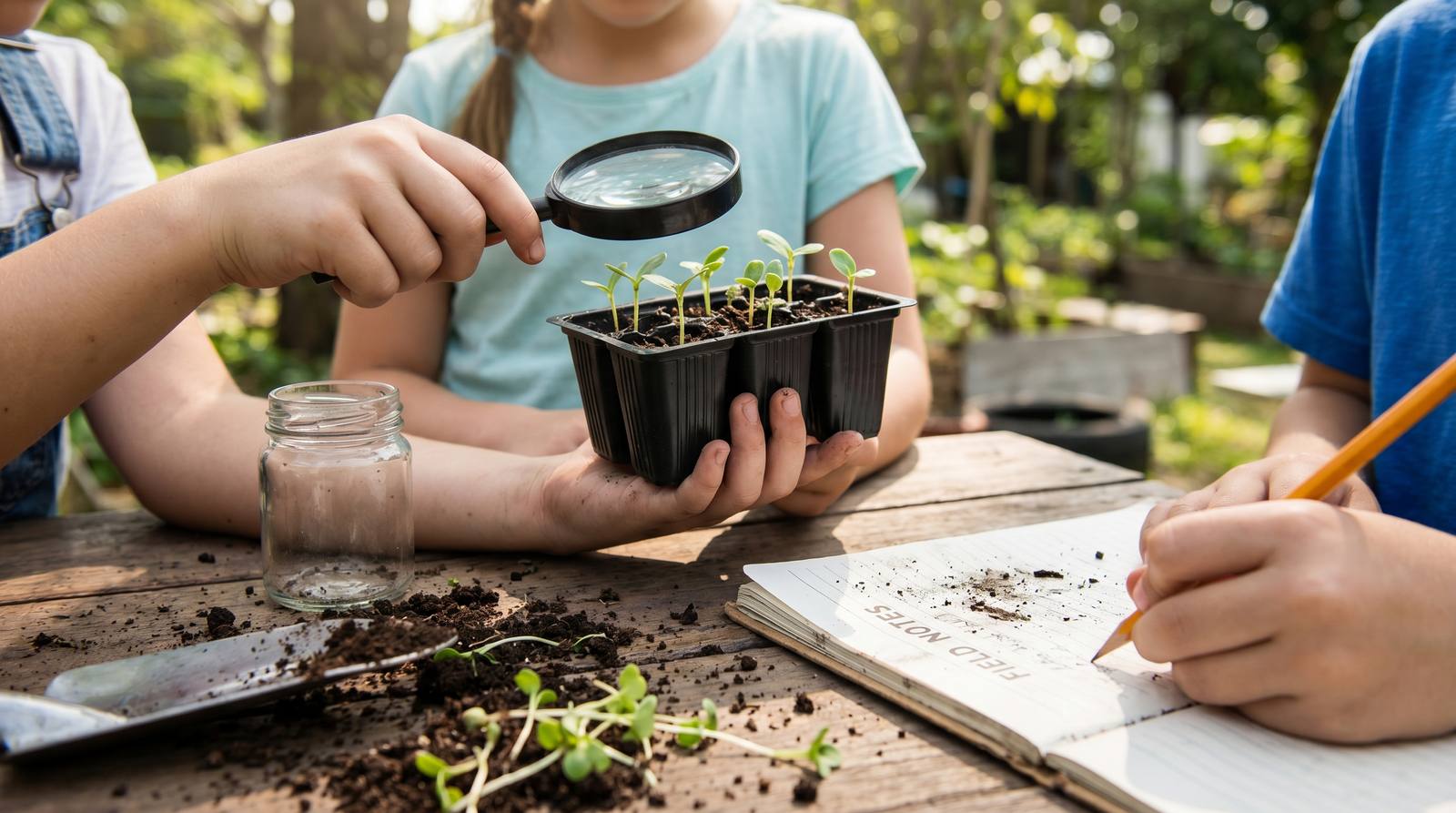
Ask an adult what they remember from primary science. Few will recite a definition - but plenty will remember the time they grew a bean, dissected a flower, or watched something hatch. We remember what we do. That's the whole case for farm-based enrichment: it takes the toughest topics on the MOE Science syllabus and turns them into something students touch, test and never forget. Here's why it works, what it covers, and how to bring your class.
The problem with science on paper
Photosynthesis. Food chains. The water cycle. Decomposers. These are beautiful, powerful ideas - and they are hard to picture from a textbook diagram. A student can memorise "producers, consumers, decomposers" for an exam and still not really get it. The understanding that lasts - the kind that helps with tricky PSLE application questions - comes from seeing the system actually working in front of you.
A living textbook, designed by doctors
A working aquaponics farm is, quite literally, a living science textbook. And in our case, the lessons aren't an afterthought - they're built in. Two Doctors Aquaponics was founded by two doctors: Dr. Lim Jia Yang, a GP who's been refining aquaponics since 2015 and won the OCBC Environment Care Fund in 2019 to build a micro-farm at the Medical Alumni Complex; and Dr. Wang Fei Fan, an ENT specialist who champions learning outdoors as part of holistic well-being. Two clinicians designing science education means programmes that are rigorous, accurate and curious about how young minds learn.
What the farm makes visible
On a single visit, abstract syllabus topics become concrete:
- Life cycles (P4) - seeds, seedlings and harvest-ready vegetables, all visible side by side in one place.
- Plant transport & photosynthesis (P5) - pull a plant from the grow bed and trace water from root to leaf; see why the towers reach for the light.
- Food chains & webs (P6) - fish, bacteria, worms, plants and humans, all interdependent on one site. Remove one and the whole system feels it.
- The nitrogen cycle - fish waste becoming plant food in real time, the engine of the entire farm.
- Man's impact & sustainability (P6) - food security, Singapore's 2035 food-resilience goals, and growing more with less water and land.
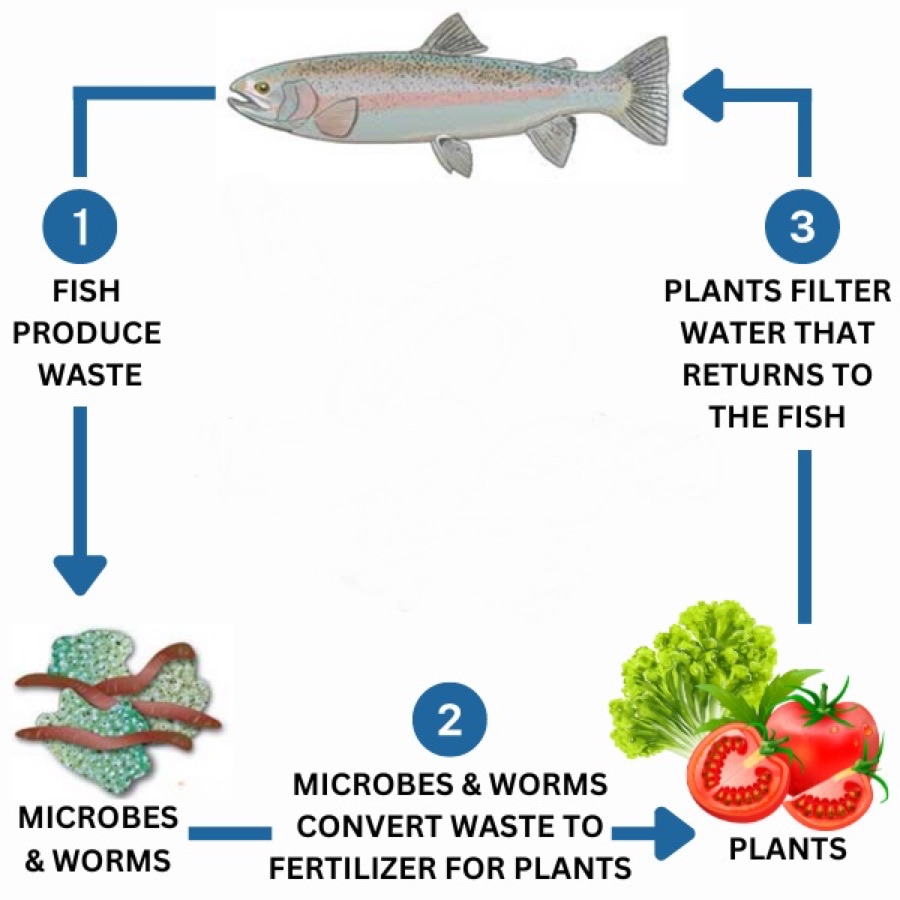
Students don't just hear that bacteria turn waste into nutrients - they test the water, read the numbers, and prove it themselves.
Why "hands-on" actually works
There's solid reasoning behind the magic. Hands-on, real-world learning:
- Builds memory through experience - multi-sensory moments are far stickier than reading alone.
- Creates "anchor" examples - come exam time, a student can recall the actual fish tank instead of a vague definition. That's gold for application questions.
- Sparks real questions - curiosity does the teaching. "Why is the water cloudy?" leads naturally into bacteria and filtration.
- Develops skills, not just facts - measuring, predicting, recording and reasoning, exactly the science-process skills schools want.
- Reaches every learner - the child who tunes out in class is often the one most alive with a worm in their hand.
What a school visit actually looks like
One session, 1.5 hours, at our Kallang farm:
- Little Farmers for schools is our preschool and childcare programme - $30 per child, run on Tuesday mornings, minimum 5 and maximum 40 children per session. Teachers and accompanying caregivers come free when the centre arranges the visit. Larger cohorts split into two back-to-back sessions in one morning, so it stays one visit day for you.
- Primary school learning journeys use the same farm and the same hands-on stations, pitched at the level and topic you are covering. Tell us the level and theme and we will map the stations to it.
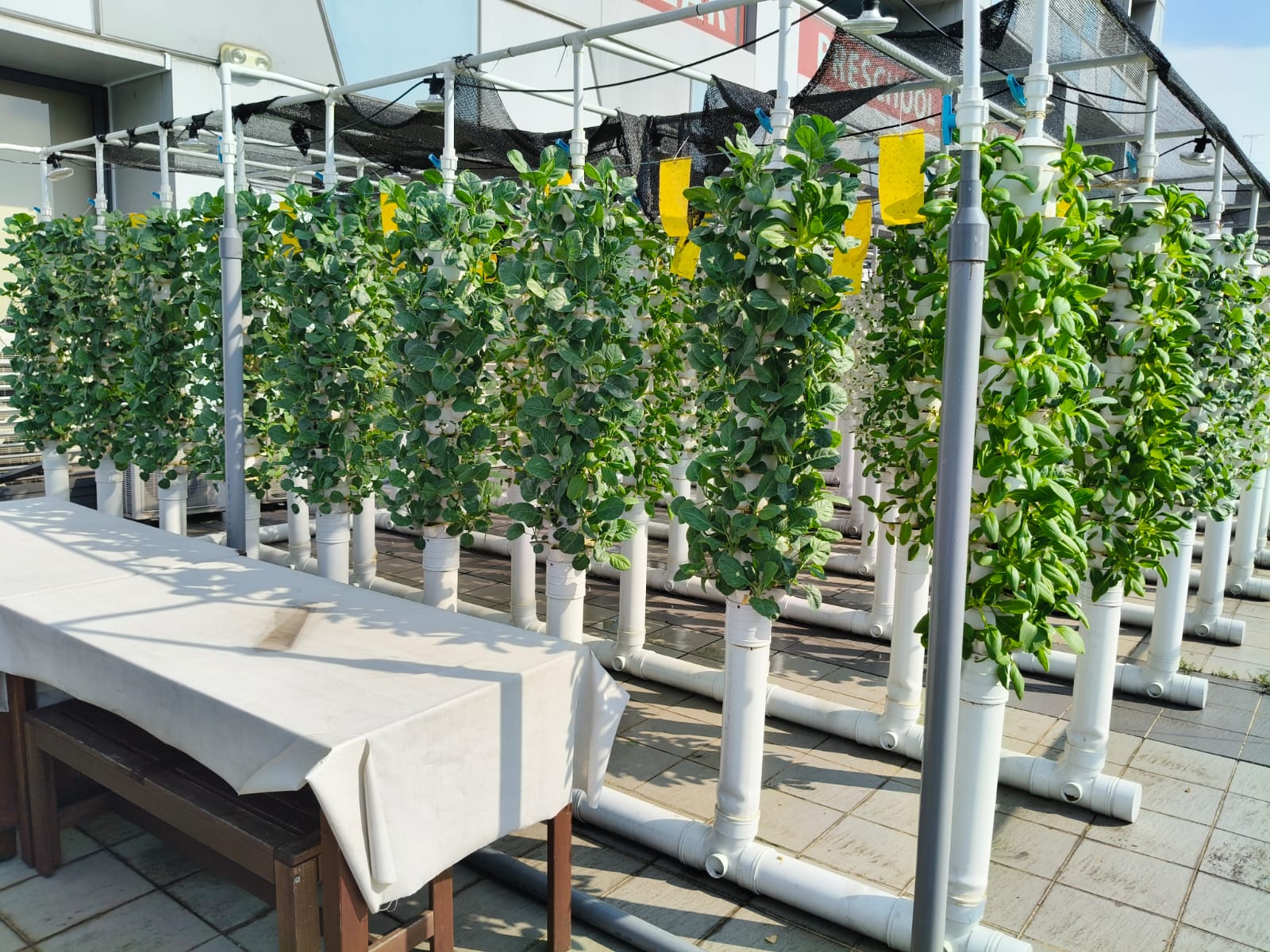
Children feed the fish, see how the growbeds and vertical towers grow food without soil, harvest what they pick, meet the compost worms, dig up a root vegetable, and build a small vermicompost set to take home. Full details, timings and what to bring are on Little Farmers for schools, and the public packages are on Farm Tours & Experiences.
For teachers & coordinators
Our programmes are designed around the MOE Science syllabus, led by farm educators (and our two founding doctors), and tailored to your group size and level. We're happy to align activities to the exact topics your students are covering, provide pre- and post-visit notes, and accommodate larger cohorts - just tell us the level and theme.
Learning that comes home with them
The best sign a lesson landed? When a child keeps talking about it at dinner - and asks to grow something themselves. Many of our young visitors leave with harvested greens, a take-home kit, and a new habit of looking at their food and wondering how it grew. Teachers tell us students are still referencing the visit weeks later in class. That lingering curiosity - not just the facts recalled on the day - is the real takeaway, and it's exactly what a good enrichment experience should leave behind.