"I'd love to grow my own vegetables, but I live in a flat - there's no space." It's the most common thing we hear, and it's mostly a myth. You don't need a garden to grow fresh food in Singapore. With soil-free systems like aquaponics and hydroponics, a sunny corner, balcony or service yard is plenty. Here's an honest, practical look at what's actually possible at home - including the catches nobody mentions.
It started in a home, too
If anyone can vouch that home growing works in Singapore, it's our founders. Two Doctors Aquaponics began in 2015 as exactly that - a home setup. Dr. Lim Jia Yang, a GP, built his first aquaponics system at home, hooked on the idea that fish could fertilise his vegetables. It worked so well he kept expanding, eventually winning the OCBC Environment Care Fund in 2019 to build a larger micro-farm, and helping a steady stream of friends set up systems of their own. So when we say a flat is enough to start, it's not a sales line - it's where the whole thing began.
Why soil-free suits Singapore homes
Traditional gardening needs soil, space and a lot of watering. Soil-free growing flips that on its head - which is exactly why it fits flat living:
- It's compact and vertical - grow up a wall instead of out across a yard.
- It's clean - no bags of soil, no muddy mess, no soil-borne pests.
- It uses far less water - aquaponics can use up to ~90% less than soil farming, because the water recirculates instead of draining away.
- It's fast - leafy greens are ready to harvest in weeks, not months.
- It looks good - a living green wall or a tidy fish-and-plant unit is a feature, not an eyesore.
How much space do you really need?
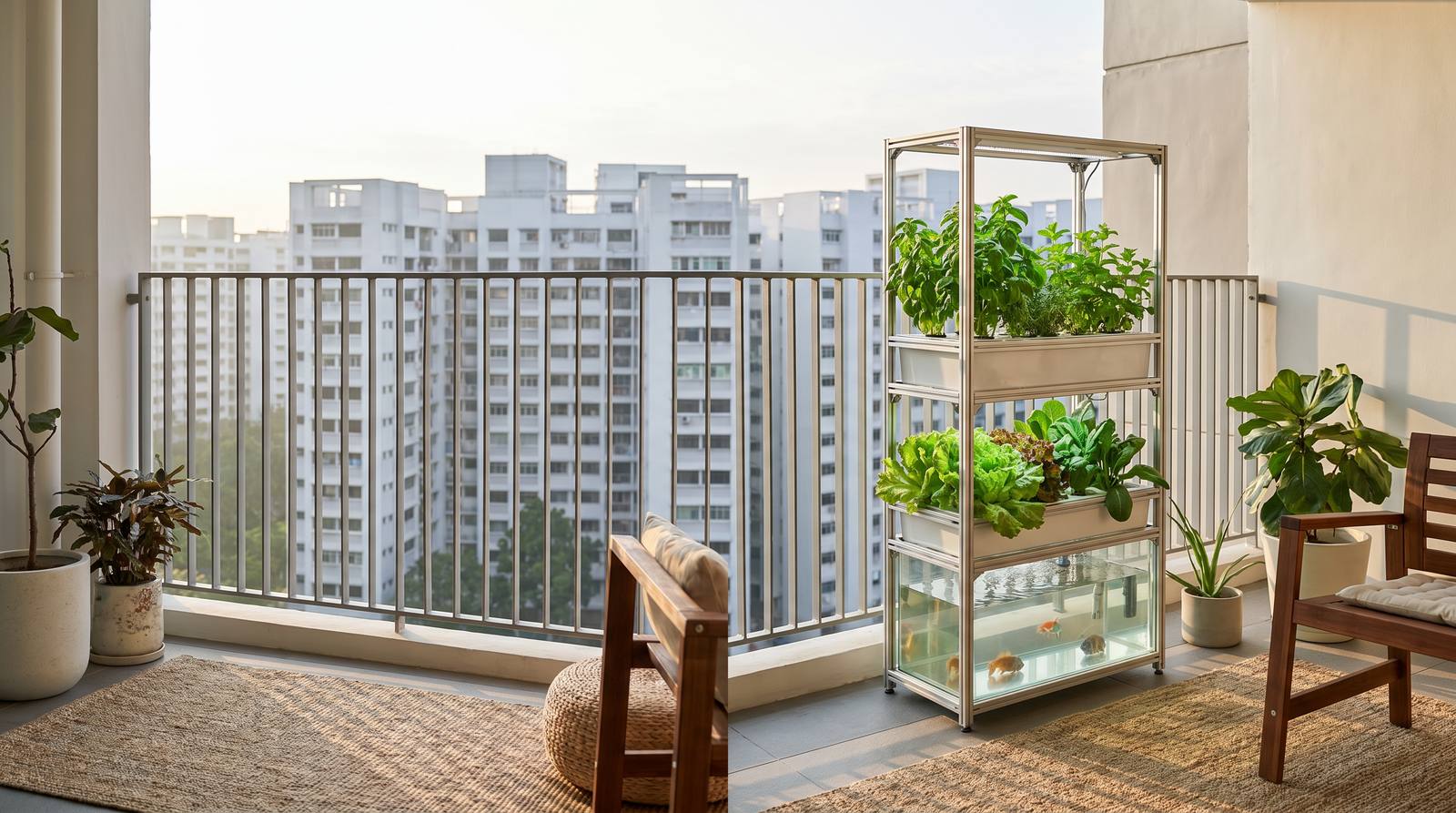
Less than you'd think. A small countertop or windowsill can hold a passive hydroponic herb setup. A balcony or service yard corner is enough for a compact aquaponics unit with a fish tank base and stacked growing racks - like our TDA AquaFrame, designed specifically for small Singapore homes. Even a stretch of HDB corridor (with neighbourly consideration) can host a slim vertical garden.
The real requirement isn't floor area; it's light. A few hours of daily sun does most of the work, and where light is short, an LED grow light fills the gap. If your space gets morning or afternoon sun, you're already in business.
You're not trying to feed the whole household - you're growing a steady supply of fresh greens and herbs, picked minutes before dinner.
What grows well at home
Start with quick, forgiving crops and build confidence:
- Leafy greens - kailan, xiao bai cai, lettuce, bok choy. Fast and reliable, ready in weeks.
- Herbs - basil, mint, coriander, spring onion. Pricey to buy, easy to grow, endlessly useful in the kitchen.
- Later on - chilli, cherry tomatoes and other fruiting plants, once you've got the hang of it and have enough light.
Aquaponics or hydroponics for home?
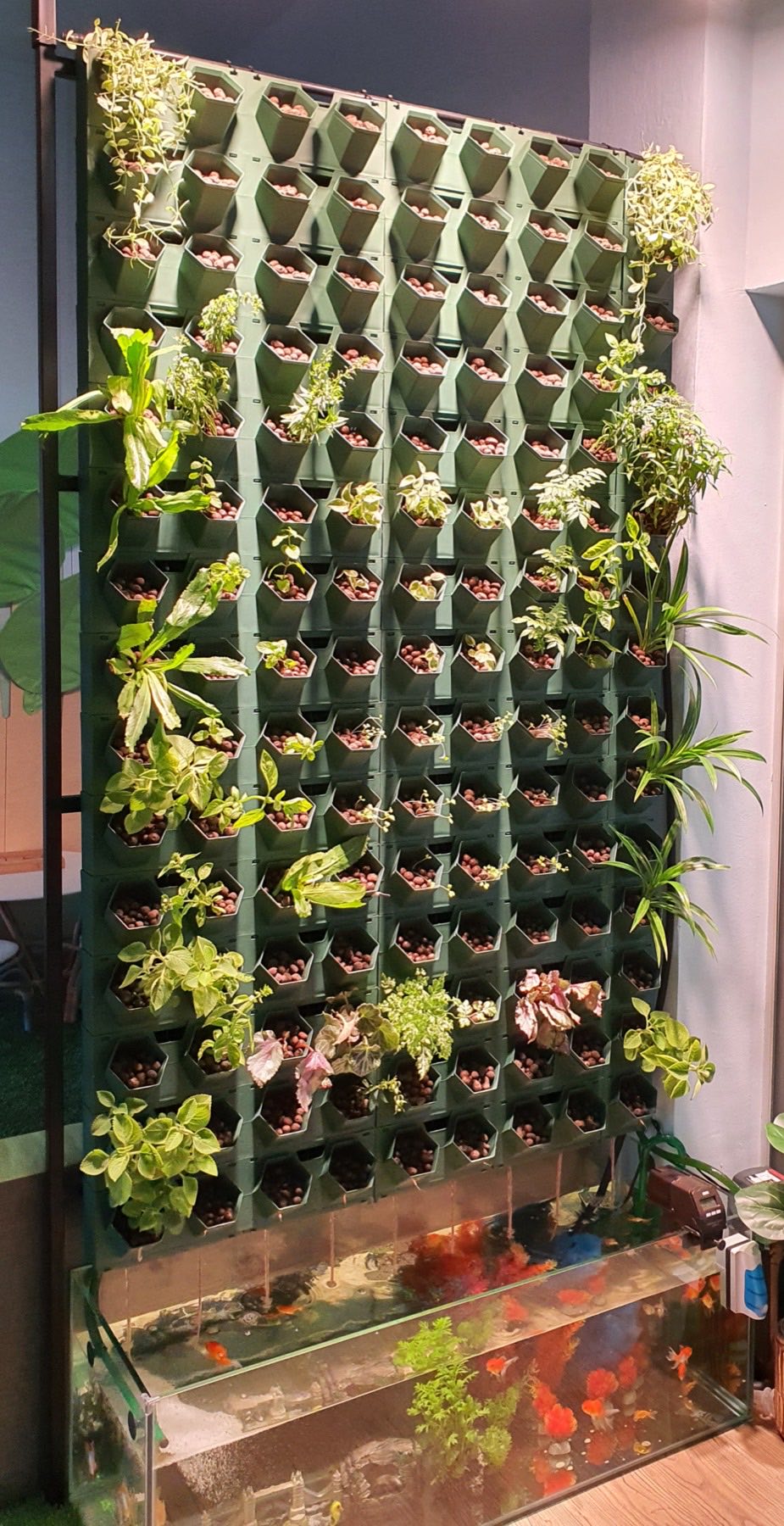
Both work indoors. Hydroponics is the simplest to start - no fish to mind, just top up the nutrient solution. Aquaponics is more of a living ecosystem: a small fish tank fertilises the plants naturally, so there's far less liquid feed to buy, and kids absolutely love it (it doubles as a pet and a science lesson). If you're weighing the two, we broke down the full comparison in this guide - but for a first home system, either is a fine place to begin.
The honest bit: what maintenance really looks like
Any living system needs a little care - but less than a pet, and it's a gentle, rewarding routine rather than a chore. In practice that means:
- Daily-ish: feed the fish (aquaponics), glance at the water level, enjoy your plants.
- Weekly: top up water, check that the pump is flowing, harvest what's ready.
- Occasionally: a quick water check, and replanting once you've harvested.
Many people find the routine calming - a few mindful minutes away from the screen. The key is to start small, learn the rhythm, and scale up once you're hooked. A system that's too ambitious on day one is the main reason beginners give up.
A realistic expectation
Home growing won't replace your grocery run - but a steady supply of just-picked greens and herbs is useful, noticeably fresher and quietly satisfying. Most people grow for the joy and the freshness first; the savings are a bonus.
The easiest way to start
You can absolutely DIY it - but the quickest path to success is to learn hands-on and start with a system built for your space. Two ways we help:
- Learn by doing - on a farm experience or Little Farmers Workshop, you'll build a take-home starter kit and see exactly how a system runs before you invest.
- Have one built for you - our build-to-order service designs and installs a system sized to your balcony, corridor or kitchen, from a compact AquaFrame to a full feature wall. Send us a photo and rough dimensions and we'll suggest a design.
Growing even a little of your own food is one of those small changes that quietly improves daily life - fresher meals, a greener home, a satisfying reason to step outside, and for families, a daily lesson in where food comes from. In land-scarce Singapore, it's also a tiny, tasty contribution to the nation's 2035 food-security goals. Not bad for a corner of your balcony.